← All articles

Strategy · 9 min · June 30, 2026

Own Your Intelligence Before the Models Get Gatekept

The model you use will keep changing. The context it needs to understand your business should be something you own.

The AI world has trained everyone to wait for the next model. A better GPT, a better Claude, a better Gemini, a better local model. That is understandable. Better models do matter. But for most business operators, the bigger risk is not that AI suddenly stops improving. The bigger risk is that the knowledge your AI needs becomes trapped inside a tool you do not control.

I was listening to an AI Daily Brief episode about the current pause in frontier model releases, and the point that stuck with me was not just the delay itself. It was the reminder that access to models is becoming more complicated. Some releases are gated to enterprise customers first. Some tools change availability. Some models perform differently across products. Some workflows depend on policies the business owner cannot see or influence.

Why this matters for actual operators

If your business depends on AI, the most valuable asset is not the model. It is the context. Context means the facts, rules, decisions, workflows, preferences, and history the AI needs to do useful work. Without that, even the best model is guessing. With it, a good model can become a real operating assistant.

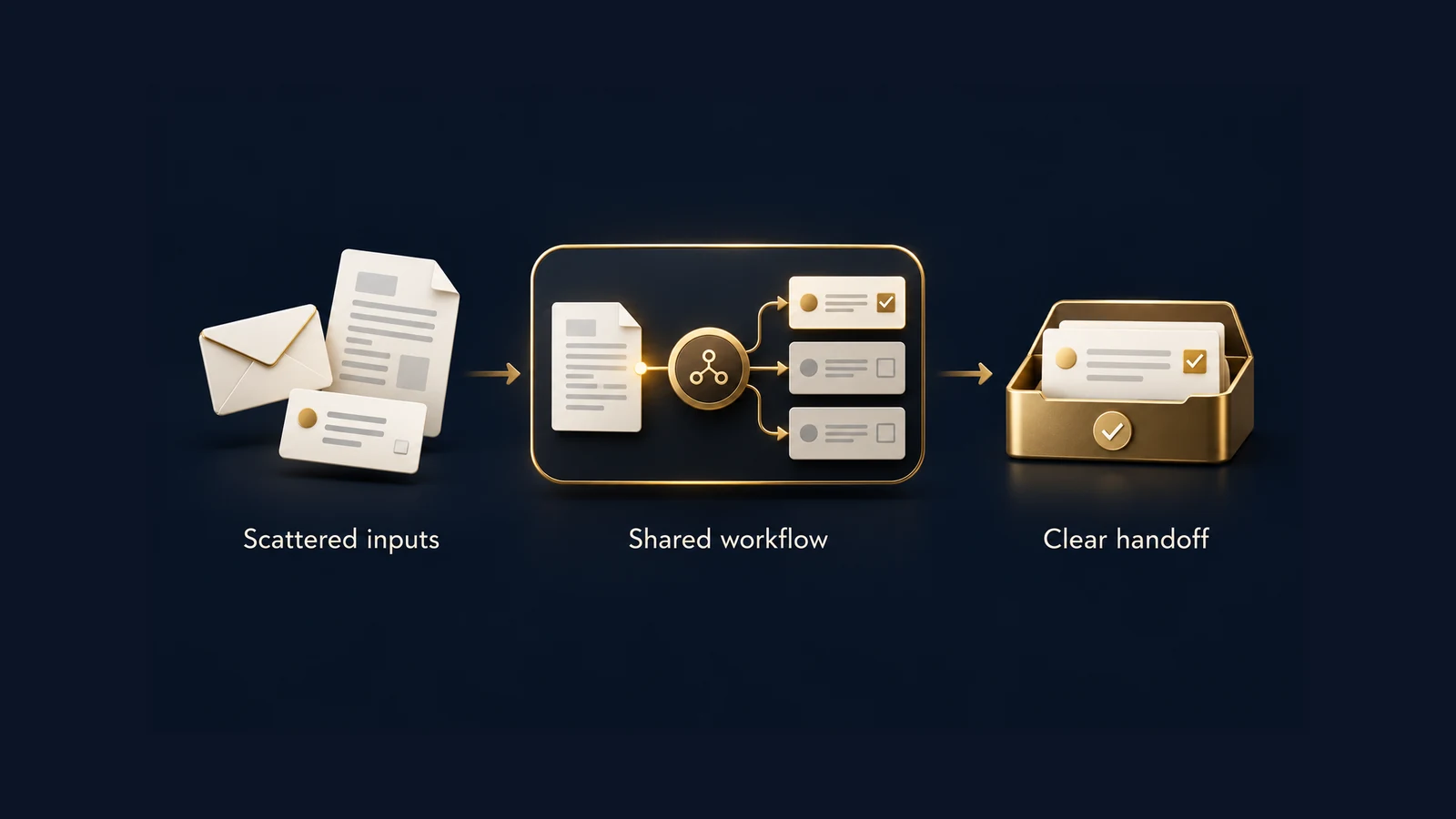
Most companies do not have that context in one place. It is scattered across inboxes, CRM notes, Google Docs, call transcripts, paper forms, spreadsheets, and people's heads. Then every time someone opens an AI tool, they have to re-explain the business from scratch. That is not an AI strategy. That is renting memory one chat at a time.

Markdown is boring in the best way

Markdown is a plain text file format that AI systems can read cleanly. It is portable, easy to edit, and not tied to one vendor.

Markdown is just plain text with simple formatting. A heading is a heading. A bullet is a bullet. A link is a link. It is not glamorous, which is exactly why it works. It can live in a folder, a shared drive, a GitHub repo, a local machine, or a client-owned workspace. Claude can read it. Codex can read it. ChatGPT can read it. A local model can read it.

That portability matters. If one tool gets worse, more expensive, restricted, or replaced, the business does not lose its operating memory. You can move the same files to the next tool. You are not starting over. You are carrying your intelligence layer with you.

The seven files I would start with

A simple knowledge base can start with seven files: snapshot, people, workflows, decisions, preferences, open loops, and AI instructions.

A starter knowledge base does not need a database, a vector search system, or a complicated app. For most small and mid-market businesses, I would start with seven markdown files. The first is a snapshot: what the business does, who it serves, and what matters this year. The second is people: key team members, clients, partners, and what each person cares about.

Then I would add workflows, decisions, preferences, open loops, and AI instructions. Workflows explain how work moves. Decisions capture what was chosen and why. Preferences tell the AI how the company writes, sells, meets, and follows up. Open loops show what is waiting on someone. AI instructions explain what the AI can do, what it can draft, and where it must ask a human.

What should stay human

Owning your intelligence does not mean handing judgment to AI. It means getting clear about where AI helps and where people still own the decision. AI can draft, summarize, organize, route, and compare. A human should still own the final call when the output affects money, compliance, trust, or a customer relationship.

That distinction matters because a knowledge base can make AI feel much more capable. The better the context, the more convincing the output. That is useful, but it also raises the bar for responsibility. If the system helps draft a recommendation, the person still needs to understand it well enough to defend it.

What this looks like in a real business

In one client workflow, the first issue was not that the AI was weak. The issue was that the operating rules lived in too many places. Intake happened in one format, follow-up logic lived in a CRM, compliance constraints lived in the owner's head, and project decisions were spread across notes. Before AI could help reliably, the business needed one clean source of truth.

Once that foundation exists, AI work changes. Instead of asking the model to guess, you hand it the relevant files. Here is the workflow. Here are the rules. Here is the current project. Here is what changed last week. Now the AI can support the business without someone rebuilding the context every time.

The move I think more operators should make now

If you are waiting for the next model before getting serious about AI, I would flip the order. Use this moment to build the context layer. Write down the workflows. Capture the decisions. Name the open loops. Turn the business from something only an experienced person can understand into something a system can read.

The next model will come. Then another one will replace it. The companies that benefit most will not be the ones who chased every release. They will be the ones that built a portable, trustworthy base of knowledge that any good model can use.

Next step

Start with the context layer

CMore Flo helps operators turn scattered business knowledge into a portable AI-ready foundation. Start with a discovery call and we will map the first workflow or knowledge base worth building.

Christopher J. Moreno

Written by

Christopher J. Moreno

Christopher builds operating systems for real businesses that need cleaner intake, clearer follow-up, and less invisible admin drag.

Our methodology

The Flo OS in practice

The approach behind this work follows the four phases of Flo OS, our operating methodology for turning messy business workflows into systems that run cleanly and compound over time.

See how we work →

Related reading

Keep reading.

All articles