← All articles

Insight · 9 min · June 30, 2026

AI Is Not Saving Time If Your Team Has To Babysit It

AI can create the appearance of saved time while quietly moving the work into checking, feeding context, and cleanup.

The most useful AI statistic I saw this week was not about a new model benchmark. It was from the Glean and Work AI Institute report covered by The AI Daily Brief. Workers reported saving about 11 hours a week with AI, but also spending 6.4 hours a week making AI usable.

That hidden work has a name: botsitting. It is the time people spend feeding AI the right context, checking its output, debugging mistakes, rerunning prompts, and cleaning up confident but wrong answers. That is the part many AI adoption conversations skip.

What botsitting actually is

Botsitting is the work around AI work: feeding context, checking outputs, debugging mistakes, rerunning prompts, and cleaning up confident wrong answers.

Botsitting is not always bad. Some of it is the responsible work of managing a powerful tool. If an AI drafts something important, a human should check it. If the output is high stakes, someone should verify it. If the model needs business context it could not know on its own, someone has to provide it.

The problem is when that work becomes invisible. A team celebrates that AI wrote the first draft in two minutes, but nobody measures the next forty minutes of review, correction, re-prompting, and reformatting. The output arrived faster, but the workflow did not necessarily get lighter.

Where the time is going

The report broke AI time into three buckets: 27 percent learning and building agents, 36 percent actively using AI to do work, and 37 percent botsitting. That means more than a third of AI time is not the work itself. It is the support labor required to make the AI useful.

The botsitting time was also itemized. Workers spent 2.3 hours a week feeding AI context, 2.2 hours supervising outputs, and 1.7 hours debugging. That is the part that should make operators pause. If your team is constantly feeding context back into tools, the business does not have an AI problem first. It has a context problem.

Tool sprawl makes it worse

One of the screenshots Chris shared showed the AI toggle tax: the cost of bouncing between disconnected AI tools, apps, and systems while the worker carries the context from one place to the next. The report said 60 percent of workers rerun the same prompt across multiple tools because the first answer was not good enough.

That is not a strategy. That is a team manually acting as the integration layer. The person remembers what the customer said, what the CRM says, what the spreadsheet says, what the AI missed, and what the next tool needs. Then leadership wonders why the productivity gains do not show up at the company level.

When botsitting turns into botshitting

The report uses a blunt term for the worse failure mode: botshitting. It means shipping AI-generated work that the person has not verified, does not fully understand, or cannot confidently stand behind. The work looks polished enough, so it moves downstream.

That is where AI stops being a productivity tool and starts becoming an accountability leak. The report said 69 percent of AI users admitted to at least one botshitting behavior at work. It also said that when AI-generated work fails, 40 percent blame the AI, while only 29 percent admit it was their own fault.

Why this matters more as AI gets better

The scary part is that better AI can make this easier to miss. The more capable the tool feels, the less carefully people watch it. The output is smoother. The tone is better. The answer sounds confident. That can create trust before the work has actually earned it.

This is especially important in businesses where mistakes affect money, compliance, health, legal exposure, or customer trust. In those environments, AI can support the work, but it cannot become the excuse. A human still owns the decision.

The real fix is not another AI tool

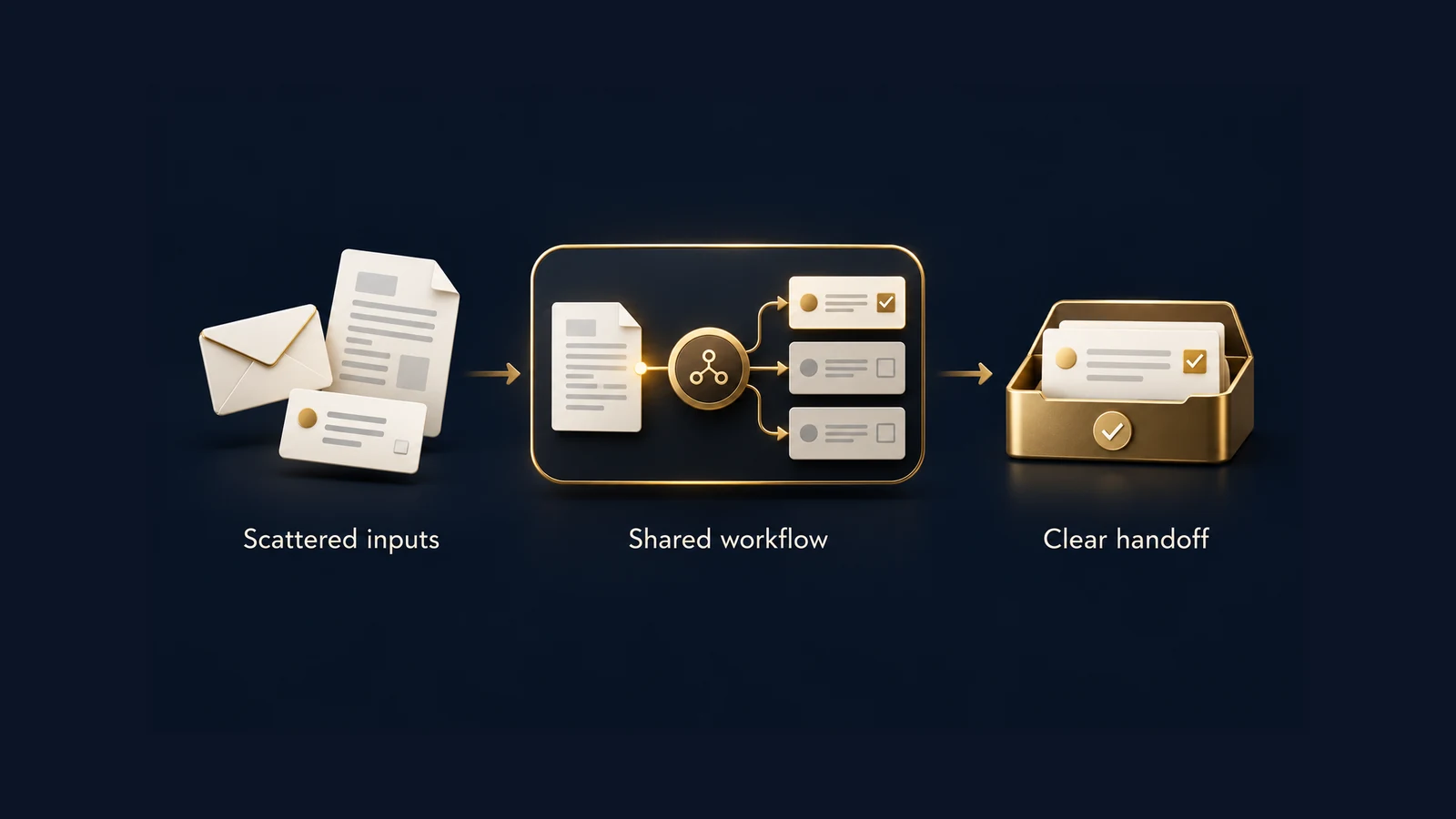
The fix is context infrastructure, clearer workflows, training, and human accountability.

If a team is drowning in botsitting, buying another AI subscription usually makes the problem bigger. The fix starts underneath the tool layer. The business needs reusable context, clear workflow rules, defined ownership, and a shared understanding of what AI is allowed to do.

That might look like a markdown knowledge base, a source-of-truth CRM, documented handoff rules, reusable prompts tied to real workflows, and a review checklist for high-stakes outputs. None of that sounds flashy. But that is what turns AI from a clever coworker everyone has to babysit into a system the business can actually trust.

What operators should measure

Do not just measure whether people are using AI. Measure where the time goes after the first output appears. How often are people reloading context? How often are they rerunning the same prompt in different tools? How often does AI work create cleanup for someone downstream?

That is the difference between AI activity and AI improvement. Activity means the team is using the tools. Improvement means the operation is cleaner, faster, more consistent, and easier to trust. Those are not the same thing.

Next step

Find the AI work that is quietly becoming cleanup

If AI is creating more checking, context-feeding, or rework than expected, we can map the workflow and find the operating layer that needs to be fixed first.

Christopher J. Moreno

Written by

Christopher J. Moreno

Christopher builds operating systems for real businesses that need cleaner intake, clearer follow-up, and less invisible admin drag.

Our methodology

The Flo OS in practice

The approach behind this work follows the four phases of Flo OS, our operating methodology for turning messy business workflows into systems that run cleanly and compound over time.

See how we work →

Related reading

Keep reading.

All articles